Why Spinal Readiness Matters Before Adventure Sports?
Adventure sports place the human spine under stresses that never occur in daily life:
- Heavy equipment weight
- Rapid pressure changes
- High-velocity movements
- Repetitive extension/flexion
- Unpredictable environmental forces
Even minor misalignments that seem harmless on land can become serious injury triggers at depth (Scuba) or at 120 mph (Skydiving).
A Chiropractic Biomechanics Evaluation ensures:
✔ Proper spinal alignment
✔ Safe load-bearing capacity
✔ Correct posture under stress
✔ Injury prevention through early detectionA simple 30-minute check can prevent lifelong damage.
Quick 5-Point Self-Test Before Scuba or Skydiving
1. Cervical Extension Test (Neck Backward Bending)
Can you comfortably look up for 30–45 seconds?
If not → Risk of nerve compression underwater.
2. Thoracic Extension Test
Can your upper back arch backward without pain?
If not → Risk during “trim”, buoyancy control & skydiving arch.
3. Pelvic Stability Test
Stand on one leg for 10 seconds.
If unstable → Risk during landings, boat entry, and equipment lifting.
4. Impact Landing Test (Skydiving)
Jump off a small stool. Any pain?
If yes → You may not tolerate parachute landing forces.
5. Load Bearing Test (Scuba)
Can you walk 10–15 steps carrying 10–15 kg?
If not → High risk of disc injury loading/unloading tanks. If any test fails → Get a chiropractic evaluation before diving or jumping. Predictable and consistent menstrual cycles.
SCUBA DIVING — Hidden Spinal Risks
Scuba looks effortless underwater, but the spine is stressed before and after the dive.
A. Equipment Load (40–60 lbs / 18–27 kg)
You must walk on unstable surfaces (boat deck, sand) while carrying:
- Steel tank
- Weights
- BCD
- Regulator
Risks:
- Lumbar compression
- Disc bulge/herniation
- Pelvic twists
- Muscle spasms
Even a slight pre-existing imbalance can fail under load.
B. Neck Extension Underwater (“Trim”)
Divers must look forward and up for long periods.
This causes neck extension for 30–60 minutes.
Risks:
- Cervical nerve pinching
- Radiating pain to arms
- Numbness mistaken as “The Bends”
- Grip weakness underwater → panic
C. Boat Entry & Exit Hazards
- Jumping in incorrectly
→ Compressive force on spine
→ Risk of vertebral end-plate damage - Climbing the boat ladder with gear
→ Navy & DAN (Diver Alert Network) classify this as a major injury risk
→ If you have Spondylolisthesis, the upward impact can cause vertebral slip or nerve injury
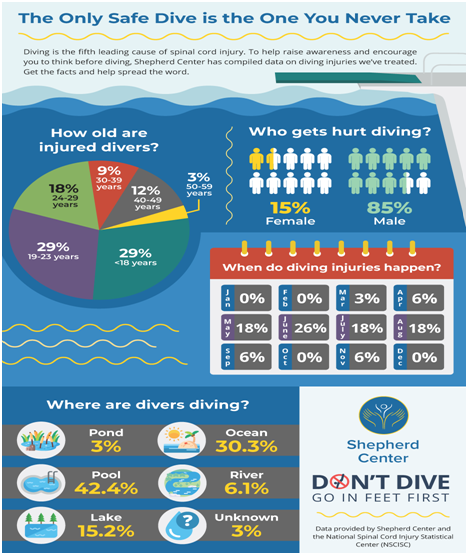
RED FLAGS (When Evaluation Is ESSENTIAL)
If you have ANY of these, do NOT dive/jump without a spine check:
- Scoliosis
- Spondylolisthesis
- Disc herniation
- Arthritis
- Stiff neck / limited extension
- Lower back pain (even mild)
- Previous surgery or fusion
- Poor posture / forward head
- Sedentary / desk job lifestyle
Most people have conditions they are unaware of, hence a pre-condition assessment is crucial
Real-World Incidents (Summarized)
1. “Pseudo-Bends” Incident
A diver with neck pain + numbness was evacuated for suspected decompression sickness.
Reality: cervical disc bulge pinching the nerve.
2. Boat Deck Rupture
Lifting tanks while twisting → L4–L5 disc extrusion → emergency back surgery.
3. Skydiving Arch Injury
Spondylolisthesis aggravated mid-air causing severe nerve compression.
4. Unreachable Valve Death
Shoulder immobility → diver couldn’t open tank valve → fatal ascent.
FAQs
1. Why is spine safety critical specifically for scuba divers?
Scuba diving involves several activities that stress the spine, including carrying heavy gear (especially tanks and weights), awkward movements while donning and doffing equipment, sustained positions during boat travel, and repetitive torsional stress underwater. Proper spine safety prevents common back and neck injuries that can quickly end a dive trip or lead to long-term chronic pain.
2. What are the most common spine injuries divers face?
The most common issues include:
Sciatica: Pain radiating down the leg due to nerve compression, often linked to carrying heavy gear.
Lumbar Strain: Pain in the lower back from lifting or carrying heavy tanks.
Cervical Strain/Whiplash: Often caused by sudden movements or impact on a boat, or craning the neck to look up while diving.
Herniated Discs: Can be aggravated by improperly lifting heavy gear with a rounded back.
3. How should I lift my scuba tank to protect my lower back?
Always use proper lifting technique:
Use Assistance: Whenever possible, place the tank on a bench or transom first, then slide it on, or ask a dive buddy for help. Never twist while carrying weight.
Squat Down: Bend your knees and hips, keeping your back straight.
Lift with Legs: Hold the tank close to your body and lift by straightening your legs, not by rounding your back.
4. Does the weight of the scuba tank cause compression issues for the spine?
Yes, the sustained weight of the tank and BCD unit, especially when worn on land or while walking, significantly increases vertical compression on the lumbar spine. Proper BC fit and minimizing time spent carrying the gear on land are key to reducing this strain.
5. What can I do before and after diving to ensure good spinal health?
Pre-Dive: Perform gentle dynamic stretches (like leg swings and light trunk rotations) to warm up the muscles supporting your spine.
Post-Dive: Perform slow, gentle static stretches focused on the hip flexors and lower back to counteract the effects of a bent or constrained position on the boat and underwater.
6. How important is core strength for spine safety in diving?
Extremely important. A strong core (abdominal muscles and lower back stabilizers) acts as a natural corset for your spine. This stabilization helps absorb the impact of wave movement on a boat and maintains neutral alignment while swimming with gear, significantly reducing the risk of strain.
Conclusion
If you have EVER experienced:
- back pain
- stiffness
- numbness
- tingling
- weakness
- poor posture
Then a Chiropractic Biomechanics Clearance is not optional — it is your life and safety insurance and is mandatory.
Diving is Beautiful — But One Wrong Move Can Damage Your Spine and your life permanently.
Consult / have your biomechanics checked before you dive in by a certified Chiropractor or a CBP Specialist @ Dr Spine.
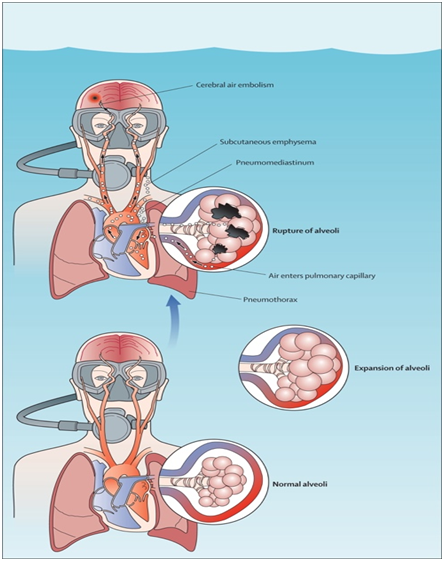
High-impact water entry, sudden pressure changes, equipment load, and improper ascent can cause:
- Vertebral compression
- Bulging/herniated discs
- Bending/twisting injuries
- Spinal cord ischemia (DCS type-II)
- Chronic lower-back pain after dives
Common Causes:
- Rapid ascent
- Heavy tank strain on lower back
- Carrying equipment with poor posture
- Hitting water surface incorrectly
- Muscle fatigue + misalignment
Also When to Seek Help:
- Back pain after a dive
- Numbness/tingling in legs
- Difficulty standing or bending
- Sudden weakness
- Persistent stiffness